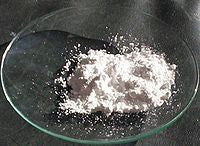
Titanium Dioxide Powder TiO2 (Rutile)
TITANIUM DIOXIDE
Rutile - Technical/Industrial Grade
Titanium Dioxide is the naturally occurring oxide of titanium and is found as the minerals Rutile, Anatase and Brookite. rhodochrosite. Titanium dioxide accounts for 70% of the total production volume of pigments worldwide. It is widely used to provide whiteness and opacity to products such as paints, plastics, papers and inks.
A special micronized rutile grade with a low inorganic and hydrophobic organic surface treatment, possessing good optical properties, opacity, and an excellent degree of dispersibility.
Rutile TiO₂ is the thermodynamically stable form with the highest refractive index of any widely used white pigment, giving superior hiding power (opacity) and durability.
Properties of Titanium Dioxide Rutile:
- Other Names: Titanium dioxide, Titanium(IV) oxide, Titanium White, Pigment White 6, C.I.No 77891.
- CAS No: 13463-67-7
- EINECS No: 236-675-5
- Formula: TiO2
- Molar mass: 79.86 g/mol
- Melting Point: 1843 C
- Boiling Point: 2972 C
- Solubility: insoluble
- Refractive index (n): ~2.73 (key to its opacity)
- Crystal system: Rutile (tetragonal)
- Crystal hardness: Mohs ~6–6.5
- Surface area (BET): ~6–12 m²/g
- Inertness: Insoluble in water; highly chemically stable in most environments
-
Band gap: ~3.0 eV (rutile)
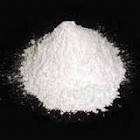
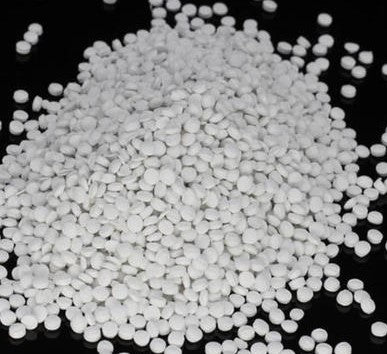
- Appearance:- white powder
- Titanium dioxide content: >93.0% of which is rutile:- >97%
- Surface treatment: Alumina, zirconium, organic
- Density:- 4g/cm3
- pH: 6-9
- Oil Absorption:- 18-23g/100g
Uses for Titanium Dioxide:
Paints & coatings
-
Primary white pigment for architectural, automotive, industrial, marine.
-
Delivers opacity, brightness, tint strength, gloss, and weatherability (with proper coatings).
-
Calcined/encapsulated grades improve UV durability and chalking resistance; optimized grades reduce TiO₂ use via spacing.
- Applied to sports pitches, tennis courts etc to produce the white lines
Plastics & masterbatch
-
Opaque white in PVC, PE, PP, PS, PET, ABS.
-
Improves whiteness, opacity, heat/UV stability, and barrier (some systems).
-
Special low-abrasion grades for film/fiber, and blue-tone grades to counter yellowness.
-
Hydrophobic, surface-treated rutile is standard to limit polymer degradation.
Printing inks
-
High opacity at thin films for packaging, publication, inkjet/UV-curable inks.
-
Controlled particle size and surface chemistry → good gloss and rheology.
Paper & paperboard (coatings)
-
Boosts brightness, opacity, print gloss at lower coat weights (though kaolin/GCC often carry bulk).
Cosmetics & suncare
-
Micronized/ultrafine rutile (often Al₂O₃/SiO₂-coated) as a physical UV filter and white pigment in sunscreens, foundations, powders.
-
Chosen over anatase for lower photoactivity (less ROS generation), while still providing strong UV scattering.
Construction & others
-
White pigment in sealants, adhesives, elastomers, and roof coatings.
-
Ceramics & dielectrics: Rutile as a raw mineral in specialized bodies/glazes, capacitors. A thin film of TiO2 is used to produce reflective optical coatings for dielectric mirrors and some gemstones.
- In ceramic glazes titanium dioxide acts as an opacifier and seeds crystal formation
-
Welding electrodes: “Rutile” electrodes (E6013, etc.) use TiO₂ minerals for stable arc and slag formation.
- Used in the production of self-cleaning glass and antifogging coatings.
- Production of titanium metal.
Rutile vs anatase (at a glance)
-
Opacity: Rutile > Anatase
-
Weatherability: Rutile > Anatase (when properly coated)
-
Photocatalytic activity: Rutile < Anatase (good for durability; anatase preferred for active photocatalysis)
-
Tone: Rutile often bluer, aiding bright whites
Click here to view Safety Data Sheet - MSDS
Click here for Specification Sheet
PLEASE NOTE: This product is not for human or animal consumption.
Original: $21.47
-65%$21.47
$7.51Product Information
Product Information
Shipping & Returns
Shipping & Returns
Description
TITANIUM DIOXIDE
Rutile - Technical/Industrial Grade
Titanium Dioxide is the naturally occurring oxide of titanium and is found as the minerals Rutile, Anatase and Brookite. rhodochrosite. Titanium dioxide accounts for 70% of the total production volume of pigments worldwide. It is widely used to provide whiteness and opacity to products such as paints, plastics, papers and inks.
A special micronized rutile grade with a low inorganic and hydrophobic organic surface treatment, possessing good optical properties, opacity, and an excellent degree of dispersibility.
Rutile TiO₂ is the thermodynamically stable form with the highest refractive index of any widely used white pigment, giving superior hiding power (opacity) and durability.
Properties of Titanium Dioxide Rutile:
- Other Names: Titanium dioxide, Titanium(IV) oxide, Titanium White, Pigment White 6, C.I.No 77891.
- CAS No: 13463-67-7
- EINECS No: 236-675-5
- Formula: TiO2
- Molar mass: 79.86 g/mol
- Melting Point: 1843 C
- Boiling Point: 2972 C
- Solubility: insoluble
- Refractive index (n): ~2.73 (key to its opacity)
- Crystal system: Rutile (tetragonal)
- Crystal hardness: Mohs ~6–6.5
- Surface area (BET): ~6–12 m²/g
- Inertness: Insoluble in water; highly chemically stable in most environments
-
Band gap: ~3.0 eV (rutile)
- Appearance:- white powder
- Titanium dioxide content: >93.0% of which is rutile:- >97%
- Surface treatment: Alumina, zirconium, organic
- Density:- 4g/cm3
- pH: 6-9
- Oil Absorption:- 18-23g/100g
Uses for Titanium Dioxide:
Paints & coatings
-
Primary white pigment for architectural, automotive, industrial, marine.
-
Delivers opacity, brightness, tint strength, gloss, and weatherability (with proper coatings).
-
Calcined/encapsulated grades improve UV durability and chalking resistance; optimized grades reduce TiO₂ use via spacing.
- Applied to sports pitches, tennis courts etc to produce the white lines
Plastics & masterbatch
-
Opaque white in PVC, PE, PP, PS, PET, ABS.
-
Improves whiteness, opacity, heat/UV stability, and barrier (some systems).
-
Special low-abrasion grades for film/fiber, and blue-tone grades to counter yellowness.
-
Hydrophobic, surface-treated rutile is standard to limit polymer degradation.
Printing inks
-
High opacity at thin films for packaging, publication, inkjet/UV-curable inks.
-
Controlled particle size and surface chemistry → good gloss and rheology.
Paper & paperboard (coatings)
-
Boosts brightness, opacity, print gloss at lower coat weights (though kaolin/GCC often carry bulk).
Cosmetics & suncare
-
Micronized/ultrafine rutile (often Al₂O₃/SiO₂-coated) as a physical UV filter and white pigment in sunscreens, foundations, powders.
-
Chosen over anatase for lower photoactivity (less ROS generation), while still providing strong UV scattering.
Construction & others
-
White pigment in sealants, adhesives, elastomers, and roof coatings.
-
Ceramics & dielectrics: Rutile as a raw mineral in specialized bodies/glazes, capacitors. A thin film of TiO2 is used to produce reflective optical coatings for dielectric mirrors and some gemstones.
- In ceramic glazes titanium dioxide acts as an opacifier and seeds crystal formation
-
Welding electrodes: “Rutile” electrodes (E6013, etc.) use TiO₂ minerals for stable arc and slag formation.
- Used in the production of self-cleaning glass and antifogging coatings.
- Production of titanium metal.
Rutile vs anatase (at a glance)
-
Opacity: Rutile > Anatase
-
Weatherability: Rutile > Anatase (when properly coated)
-
Photocatalytic activity: Rutile < Anatase (good for durability; anatase preferred for active photocatalysis)
-
Tone: Rutile often bluer, aiding bright whites
Click here to view Safety Data Sheet - MSDS
Click here for Specification Sheet
PLEASE NOTE: This product is not for human or animal consumption.